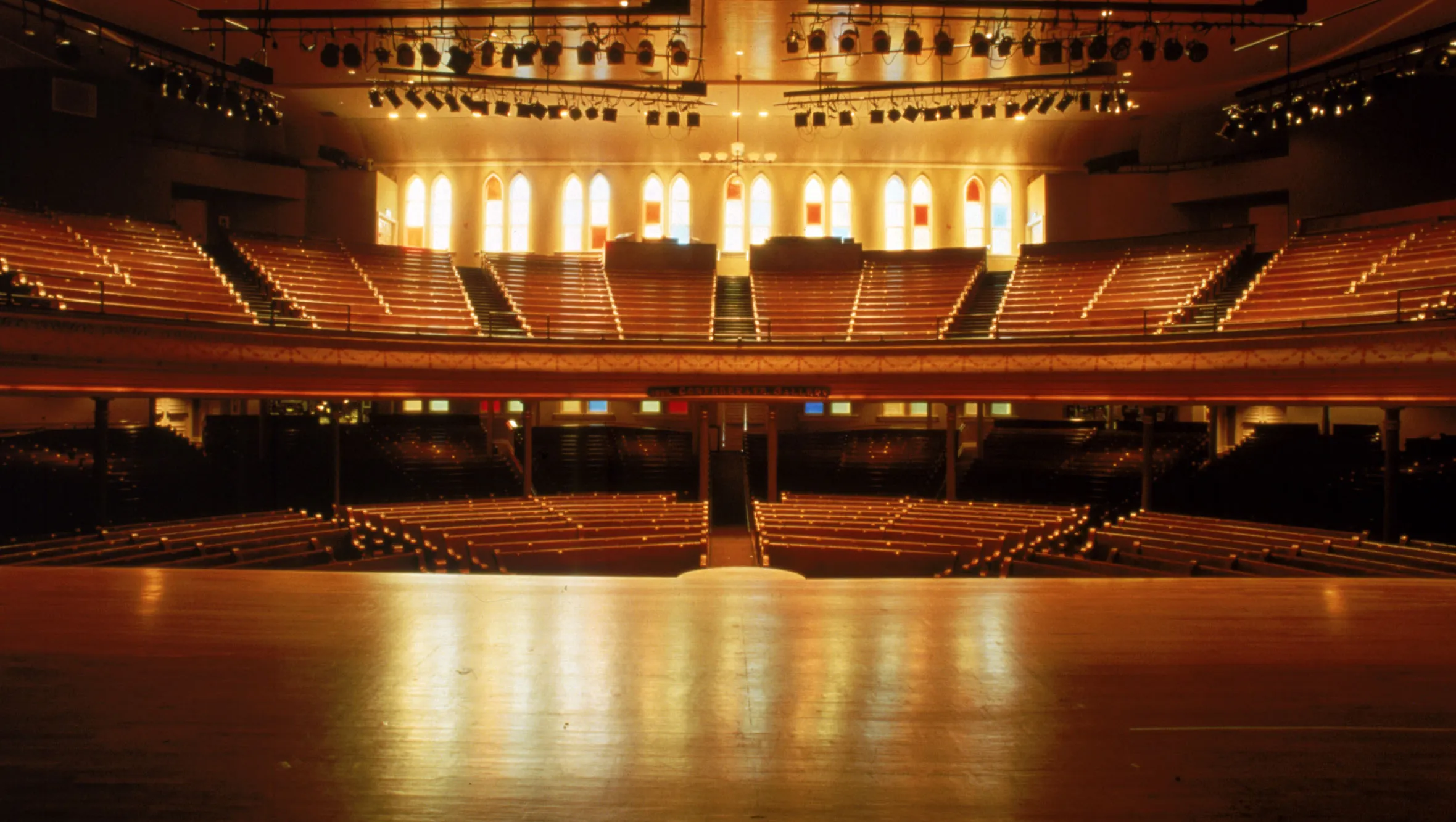
Ryman Auditorium
Known as the Mother Church of Country Music, this National Historic Landmark hosted the Grand Ole Opry for decades.
View the stage from the balcony for the best acoustics.

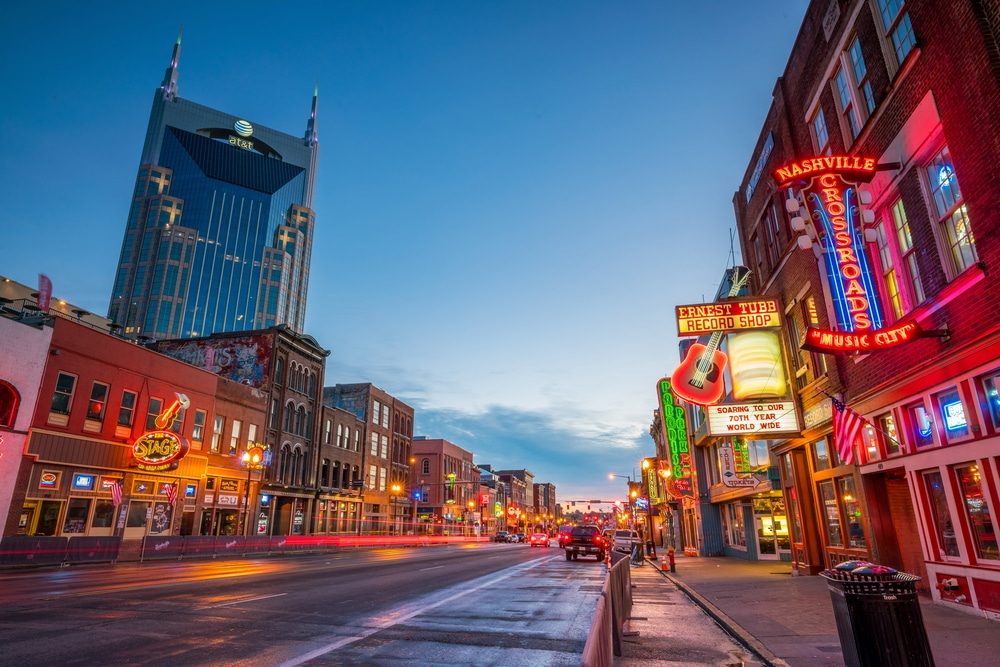
Downtown Nashville condenses two centuries of American music history into a walkable grid anchored by Broadway's honky-tonks and the Cumberland River. A self-guided route connects the Ryman Auditorium, historic Second Avenue, and the Printer's Alley corridor in a loop that spans roughly two miles and reveals the architecture behind the city's soundtrack.
Quick answer
A nashville walking tour map typically covers a 2.0 to 2.5 mile loop through Downtown, starting near the Ryman Auditorium and tracing Broadway east toward the river, then returning via Second Avenue and the Gulch district. The route is accessible year-round with no entrance fees for street-level exploration, though individual venues along the path set their own hours. Early morning departures between 8:00 and 10:00 allow you to photograph storefronts and murals before the honky-tonk crowds arrive.
Broadway's neon grid sits four blocks north of the Cumberland River, a density that allows most visitors to cover the canonical music landmarks on foot without backtracking. The district's commercial spine runs east-west for twelve blocks, bordered by the State Capitol grounds to the north and the Gulch's rail corridor to the south. A nashville walking tour map usually anchors the route at Fifth and Broadway, where the Ryman Auditorium's redbrick Gothic Revival facade provides both a visual landmark and a narrative starting point. The street grid itself dates to the 1780s, platted in a rectilinear pattern that disregards the river's curve. Broadway was originally a wagon road linking the Cumberland ferry to the inland settlements; by the 1890s it had become the city's commercial artery, lined with dry goods stores and vaudeville houses. The honky-tonk typology emerged in the 1940s when taverns began hosting live country acts in ground-floor storefronts. Today the corridor between Third and Fifth avenues retains that vernacular: narrow frontages, plate-glass windows, and stages set close enough to the sidewalk that sound spills onto the street. Most self-guided routes follow a clockwise loop: west along Broadway to see the Ernest Tubb Record Shop and Tootsie's Orchid Lounge, south toward the Johnny Cash Museum, then east along Second Avenue, where the original warehouse district has been adapted into restaurants and loft conversions. Printer's Alley, a service lane one block north of Broadway, offers a quieter parallel route past the speakeasy facades that supplied the city's underground economy during Prohibition. The entire loop operates on public sidewalks, with no ticketed gates or restricted hours. The district's flat topography and consistent block lengths make distance easy to gauge: each north-south block measures roughly 300 feet, and the full Broadway corridor from First to Tenth Avenue spans just under a mile. Navigation requires only a basic understanding of the numbered avenue system, which ascends westward from the river. The concentration of landmarks within a four-block radius means that even a two-hour walk captures the Ryman, the Schermerhorn Symphony Center, and the honky-tonk strip that defines the city's public image. Walking remains the most efficient way to read the layers of a downtown that built its economy on song publishing and live performance.
“Broadway's twelve-block spine condenses two centuries of vernacular music architecture into a grid you can cross in under twenty minutes.”
This route suits first-time visitors who want a structured three-hour loop through Downtown Nashville's core music and history district. Start early to beat crowds and enjoy cooler temperatures.
Begin at the Ryman's iconic facade on 5th Avenue. Photograph the red-brick landmark and read the historical plaques outside (10 minutes).
Walk south on Broadway and explore the strip's famous venues—Tootsie's Orchid Lounge, Robert's Western World, and Legends Corner. Most bars open mid-morning; window-shop their storefronts and memorabilia (30 minutes).
Continue east on Broadway to the sidewalk stars honoring country legends between 4th and 5th Avenues. Pause for photos at your favorite inductees (15 minutes).
Head north on 1st Avenue to reach the Cumberland River waterfront. Walk the park's greenway, check the Nashville skyline view, and rest on a bench (20 minutes).
Double back west to 3rd Avenue and turn into Printer's Alley, a historic side street lined with vintage cocktail lounges and theater facades. Note the architectural details and nightlife legacy (15 minutes).
Stroll west on Broadway past boot stores, record shops, and honky-tonk entrances. Loop back to your starting point via 5th Avenue (30 minutes).
Downtown Nashville features a concentration of historic musical landmarks and cultural institutions that define the city's legacy. These sites serve as primary navigation points for exploring the urban core.
Known as the Mother Church of Country Music, this National Historic Landmark hosted the Grand Ole Opry for decades.
View the stage from the balcony for the best acoustics.
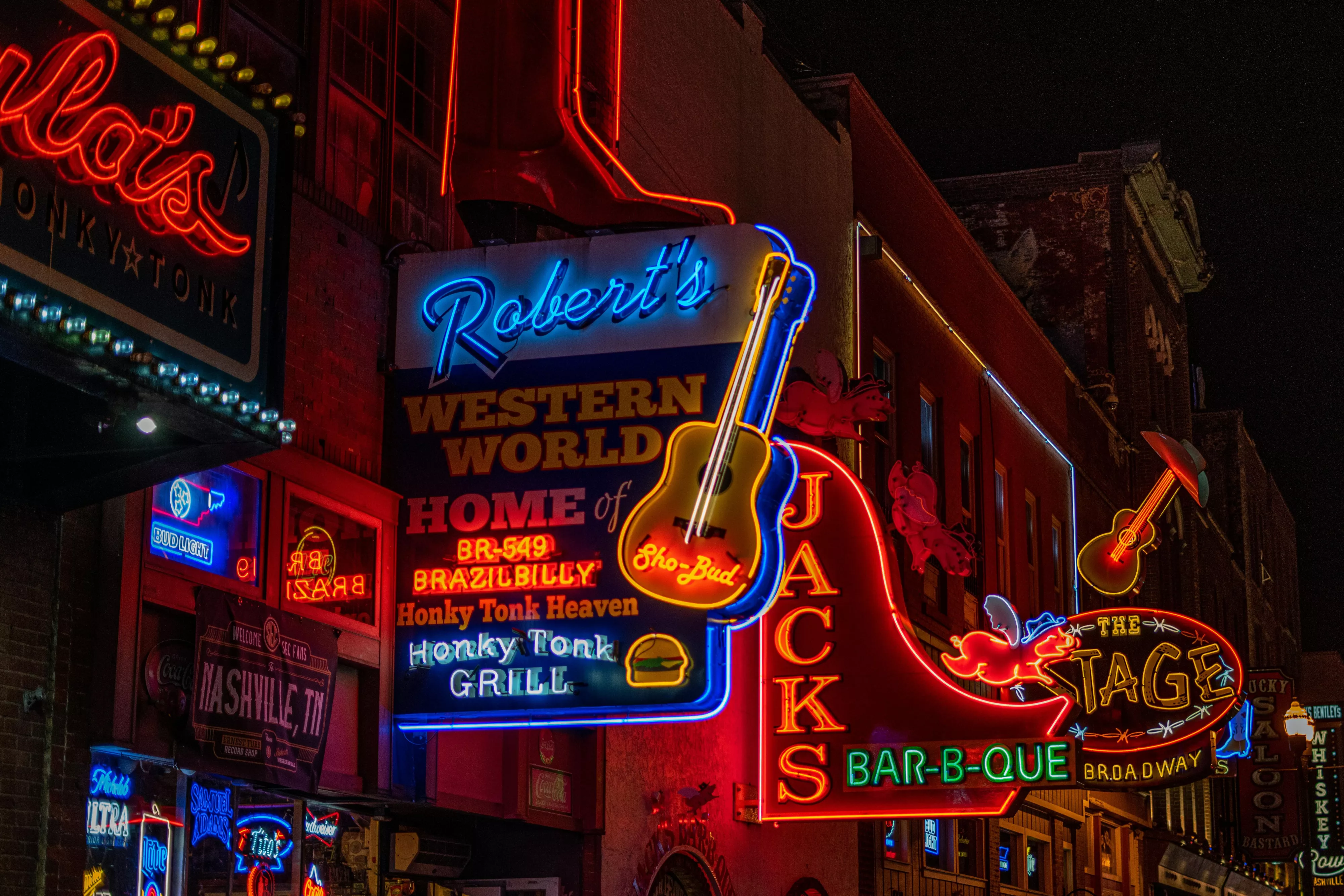
A stretch of Lower Broadway featuring historic venues offering live music throughout the day.
Visit during the morning to hear soundchecks without dense crowds.
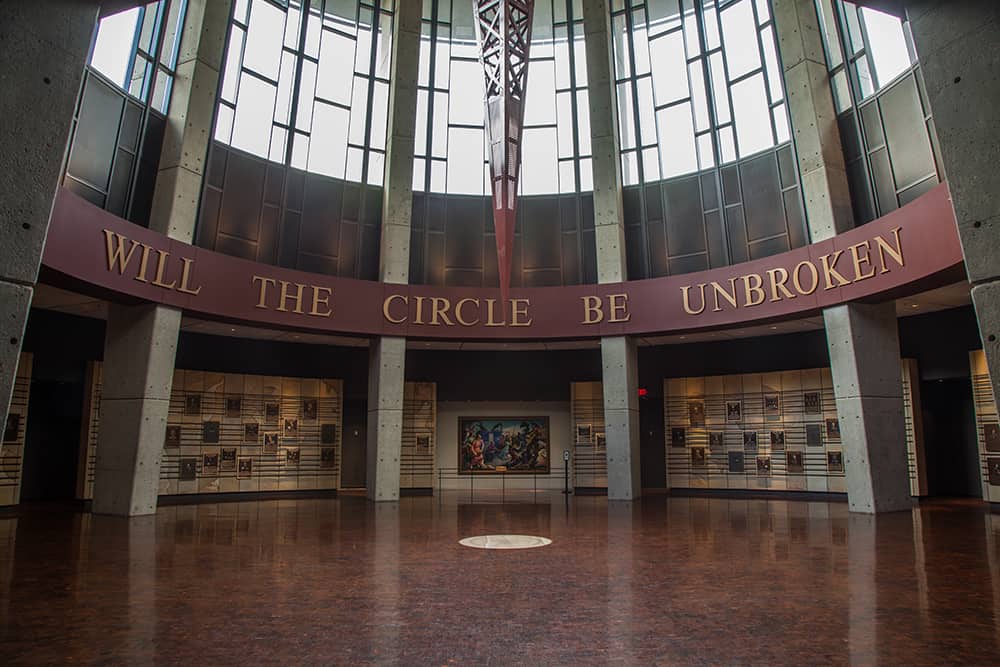
This institution documents the history and evolution of American country music through extensive exhibits.
Check the rotunda for the Hall of Fame plaques.
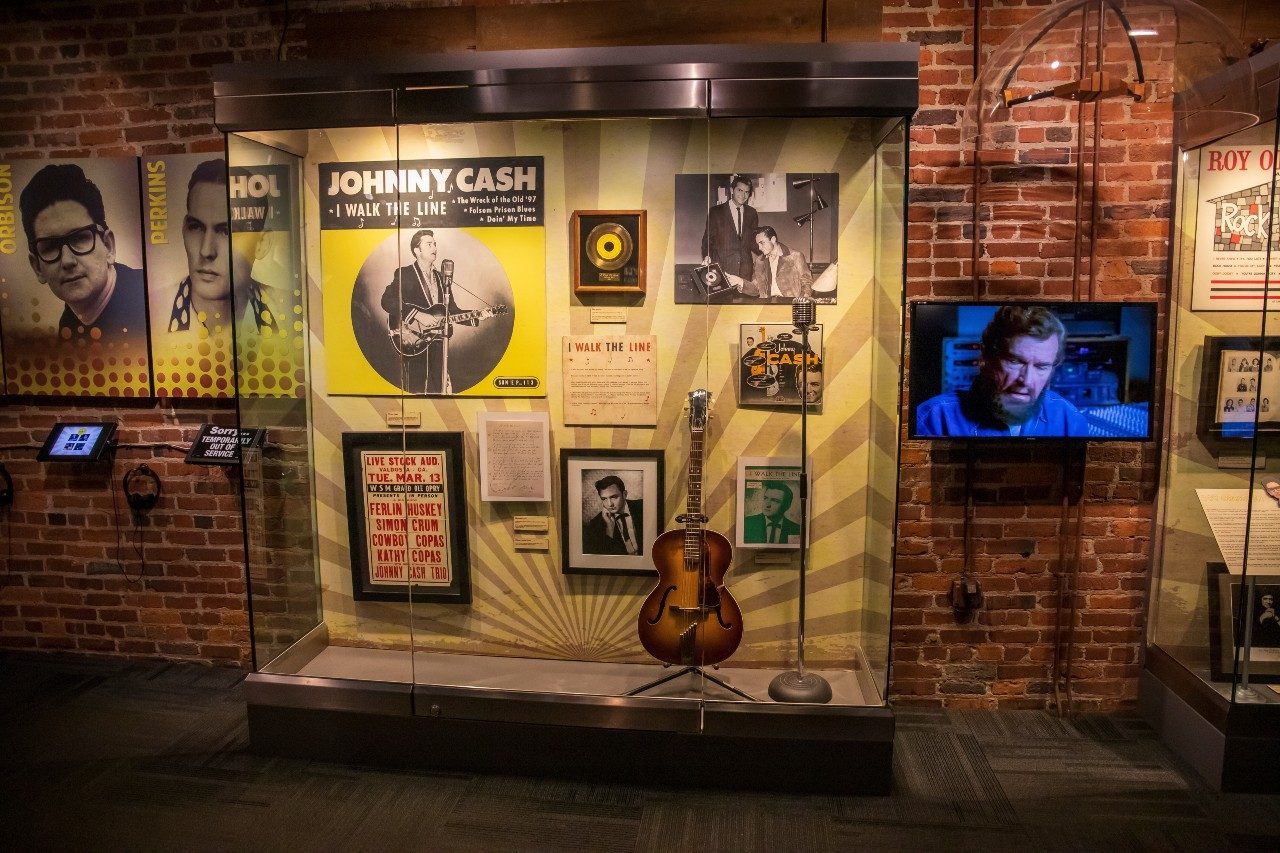
Located near the riverfront, this facility houses the largest collection of Johnny Cash artifacts in the world.
Look for the wall of records near the entrance.

Designed by William Strickland, this Greek Revival building sits on a hill overlooking the downtown district.
Walk the exterior grounds to view the historic monuments.
Downtown Nashville is centrally located and highly accessible, with most walking tour routes beginning near the historic district. Visitors can arrive via major transit hubs or local road networks.
WeGo Public Transit to Central Station
I-65 or I-40 to Downtown Nashville exits
Walk from the John Seigenthaler Pedestrian Bridge
Drop-off at Broadway or 2nd Avenue
For the most efficient start to your self-guided exploration, head toward Broadway or the riverfront district, as these areas serve as the primary hubs for connecting to established walking routes.
The best arrival window for your self-guided walking tour is 08:00–10:00. This timing allows you to navigate Downtown Nashville before mid-day crowds peak and temperatures rise.
Mild, 60-75°F. Pleasant conditions for walking downtown.
Hot and humid, 85-90°F+. Seek shade and hydrate frequently.
Cooling, 60-75°F. Ideal walking weather before winter.
— Arrival between 08:00 and 10:00 ensures quieter streets.
Verdict: For the most comfortable experience, plan your visit for Tuesday to Thursday between 08:00 and 10:00 during the months of April or October.
Admission costs for a Nashville walking tour depend entirely on your preference for self-guided exploration versus professional guided services. Self-guided walking tours are free of charge, while private guided tours vary by operator.
Verdict: A typical adult pays 0 USD for self-guided tours, though costs vary if choosing to hire a private guided service.
The walking tour routes throughout Downtown Nashville consist of public streets and sidewalks that remain accessible at all times. Visitors may explore the area 24 hours a day, seven days a week.
Everything you need to know about nashville walking tour map
A nashville walking tour map serves as a visual guide to navigate the historic streets and musical heritage sites of the city. You can follow the marked routes to discover landmarks at your own pace without time constraints.
Guided tours offer narrative depth and historical context provided by local experts that a standard map might lack. Choosing between a map and a guide depends on whether you prefer independent discovery or structured storytelling.
Following a self-guided route using a nashville walking tour map costs 0 USD for general exploration. While the map itself is free, please note that private guided tours vary by operator.
The best arrival window for your visit is 08:00–10:00 to avoid mid-day crowds and peak temperatures. Planning your morning around these hours ensures a comfortable experience while navigating through Downtown Nashville.
When using a nashville walking tour map, remain aware of your surroundings and stick to well-lit, public areas. Downtown Nashville is generally pedestrian-friendly, but staying alert in busy districts is standard practice for any city visitor.
Yes, families can enjoy self-guided walks by adjusting the pace to suit children and taking breaks at local parks or cafes. The flat, accessible layout of the downtown district makes it manageable for younger walkers to join the experience.
Self-Guided Nashville Walking Tour Guide
Read more Tickets & toursNashville Ghost and True Crime Tours
Read more GuideFree Nashville Walking Tours
Read more GuideIs Nashville Worth Visiting?
Read more Tickets & toursNashville Food Walking Tours
Read more Tickets & toursNashville Drinking and Brewery Tours
Read more GuideNashville Walking Safety Guide
Read more